
What changed with SAP's tier model approach?
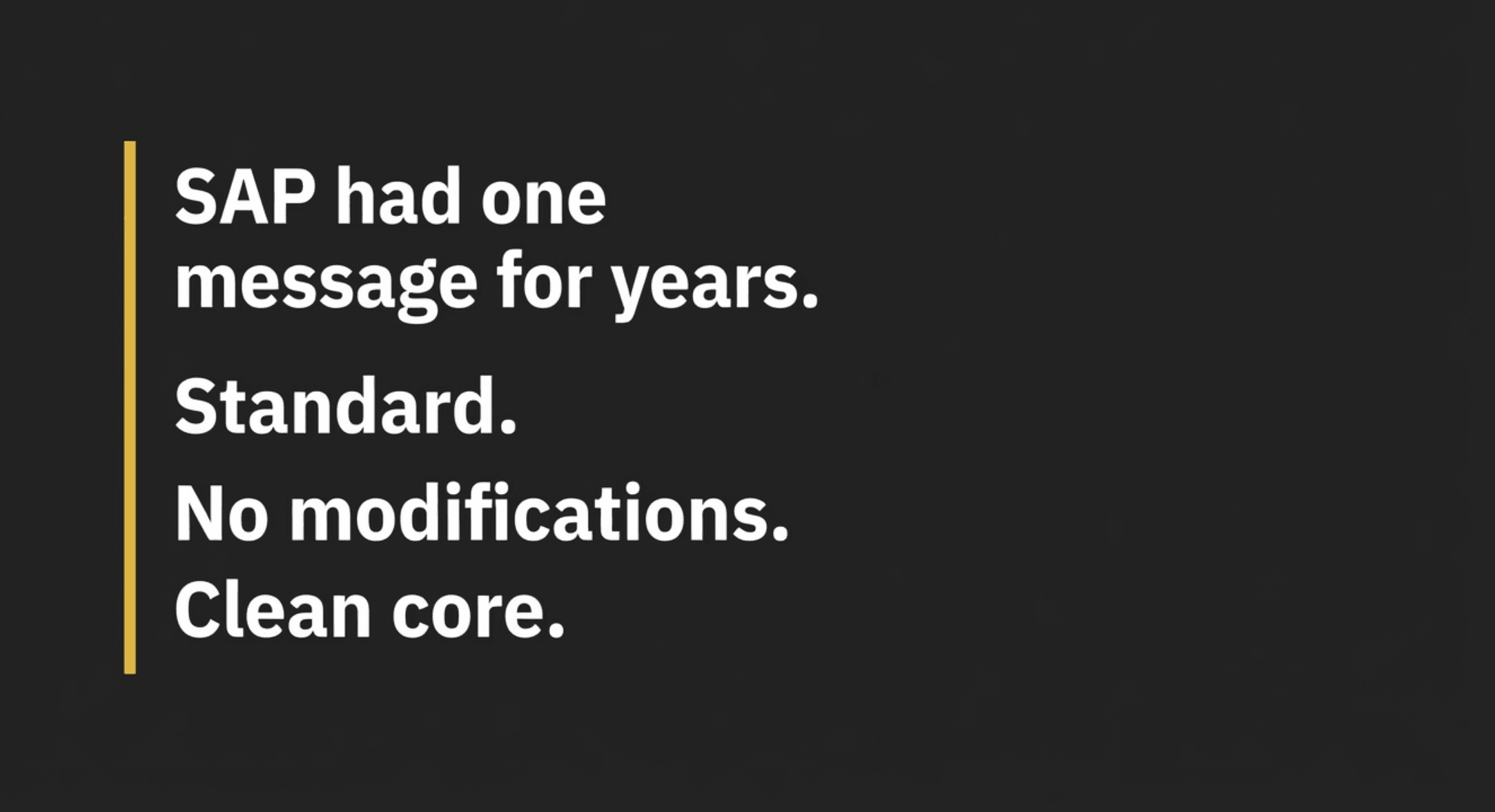
For over a decade, SAP maintained an unwavering stance: stick to standard, avoid modifications, keep your core clean. This message echoed through every conference, every implementation guide, and every consultant recommendation. The subtext was clear—if you deviated from standard SAP functionality, you were doing something wrong. Then came the tier model, and everything changed.
The tier model introduced four distinct categories: Tier A (cloud-first, standard processes), Tier B (on-premise with standard configurations), Tier C (customized systems with modifications), and Tier D (heavily modified legacy systems). Each tier carries different risk profiles, support expectations, and transformation pathways. What makes this revolutionary is not the categorization itself, but what it represents—SAP's first public acknowledgment that customers who modified their systems often had valid business reasons for doing so.
Why does this shift matter for enterprises?
This change reflects a fundamental evolution in how SAP views its relationship with customers. Previously, any deviation from standard was treated as a mistake to be corrected. Now, SAP recognizes that enterprises operate in complex environments where standard processes sometimes cannot accommodate unique business requirements, regulatory demands, or competitive advantages. The tier model provides a framework for managing these realities rather than simply condemning them.
Tier C is particularly significant because it represents recognized reality rather than approved practice. SAP acknowledges that these heavily customized systems exist, serve important business functions, and deserve structured support—even while providing clear migration paths toward more standardized approaches. This nuanced position allows organizations to make informed decisions about the trade-offs between customization benefits and technical debt.
How should organizations interpret this messaging evolution?
The tier model signals that SAP has matured from a software vendor focused primarily on product adoption to a business transformation partner that understands enterprise complexity. This shift has practical implications for how organizations approach their SAP strategies. Rather than feeling pressured to abandon all customizations immediately, companies can now assess their modifications against business value and plan strategic transitions.
Smart organizations will use this framework to conduct honest assessments of their current state. Which customizations deliver genuine competitive advantage? Which modifications exist because of outdated business processes that could be redesigned? Which technical debts create the highest operational risks? The tier model provides vocabulary and structure for these critical conversations between business and IT stakeholders.
What does this mean for future SAP projects?
This evolution changes how organizations should approach new SAP initiatives and existing system optimization. The binary choice between 'standard or wrong' has been replaced with a more sophisticated risk-reward framework. Project teams can now have productive discussions about customization decisions, weighing business requirements against long-term maintenance implications with SAP's implicit blessing.
The messaging shift also reflects broader market pressures SAP faces from cloud-native competitors who offer greater flexibility and faster innovation cycles. By acknowledging the legitimacy of certain customizations, SAP demonstrates understanding that enterprises cannot always wait for standard functionality to meet their needs. This pragmatic approach may help retain customers who might otherwise seek more adaptable platforms for their critical business processes.
Key Takeaways
- SAP's tier model acknowledges that deviations from standard often have legitimate business reasons
- Tier C represents recognized reality rather than approved practice, with planned migration paths
- The shift changes SAP's messaging from rigid standardization to pragmatic accommodation
- This evolution reflects SAP's maturation from software vendor to business transformation partner
- Organizations can now make informed decisions about customization risk versus business value
Ready to work with senior SAP experts?
Book a 45-minute intro call to discuss your SAP priorities and find the right engagement model.
Book an Intro Call